
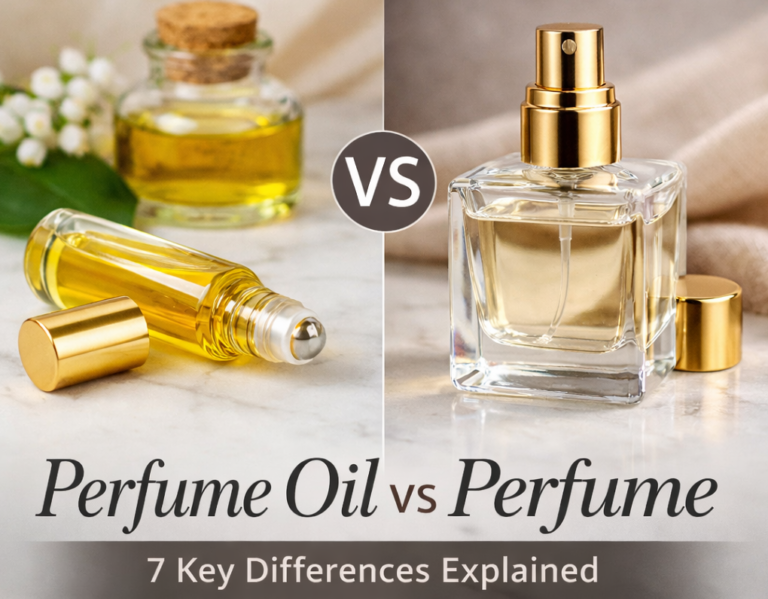
Perfume oils contain a higher fragrance concentration in an alcohol-free oil base which allows the scent to last longer and stay closer to the skin – often 8+ hours. Traditional perfumes (such as Eau de Parfum sprays) use alcohol to disperse fragrance into the air which creates stronger projection and a noticeable scent trail, but they usually fade faster.
Because of this difference, perfume oils are better for sensitive or dry skin and for people who prefer subtle, long-lasting fragrance, while perfume sprays are ideal if you want a bold scent that projects further and fills the space around you.
But longevity and projection are only part of the story.
The real difference also affects how the fragrance develops throughout the day, how it feels on your skin, how convenient it is to carry, and even which option offers better value.
So, if you’ve ever wondered “Should I choose perfume oil or perfume?” the answer depends on several important factors.
Read on to discover the 7 key differences between perfume oil and perfume — and which one is actually the better choice for you. Let’s first go through the basics.
What Is Perfume Oil?
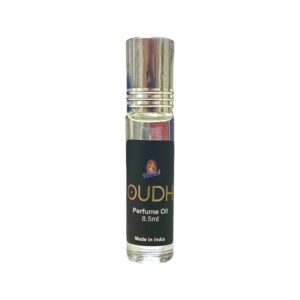
Perfume oil is a concentrated fragrance blend dissolved in a carrier oil instead of alcohol.
The scent molecules are mixed with skin-friendly oils such as jojoba oil or fractionated coconut oil. This creates an alcohol-free fragrance that sits directly on the skin and releases scent slowly over time.
Unlike traditional spray perfumes, perfume oils do not contain alcohol. This changes the way the fragrance behaves. Instead of producing a strong burst when sprayed, the scent develops gradually and stays closer to the skin. This results in a more personal and long-lasting fragrance experience.
Most perfume oils are packaged as roll-on perfumes. It makes them easy to apply and convenient to carry. You simply glide the rollerball across pulse points such as the wrists, neck, or behind the ears. The oil absorbs into the skin and releases fragrance throughout the day as your body warmth activates the scent.
Because perfume oils are alcohol-free, they are preferred by people with sensitive or dry skin. The carrier oils can feel moisturising rather than drying which makes them a comfortable option for everyday wear.
Another reason perfume oils are growing in popularity is their subtle scent projection. Instead of filling a room, the fragrance stays closer to the wearer. It makes a soft scent aura that people notice only when they come closer.
Key Features of Perfume Oil
- Alcohol-free formula made with carrier oils
- Higher fragrance concentration than many spray perfumes
- Long-lasting scent that can stay on skin for 8+ hours
- Roll-on or dropper application for precise use
- Skin-friendly and moisturising compared with alcohol sprays
- Creates a subtle, close-to-skin fragrance aura
Understanding how perfume oil works makes it easier to see why many people prefer it for daily wear.
What Is Perfume?
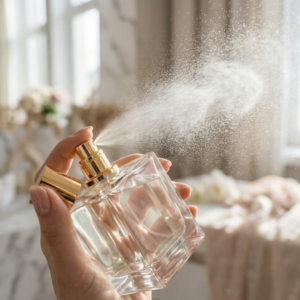
Perfume is a fragrance product made by blending aromatic oils with alcohol and water.
The alcohol acts as a carrier that helps the scent spread quickly when sprayed and evaporate into the air. That is why traditional perfumes produce a strong initial burst of fragrance.
Because alcohol evaporates rapidly, perfume tends to project further from the skin. This creates what fragrance experts call “sillage” – the scent trail that follows someone as they move. For people who want a fragrance that is more noticeable in the surrounding space, perfume sprays can be an appealing choice.
Perfumes are applied using a spray bottle. This allows the fragrance to cover a larger area of the body with just a few spritzes. This makes application quick and convenient compared with the more targeted roll-on application used with perfume oils.
However, not all perfumes are the same strength. Their intensity and longevity depend on how much fragrance oil they contain.
Key Features of Perfume
- Contains fragrance oils mixed with alcohol and water
- Usually applied with a spray atomiser
- Produces stronger projection and wider scent coverage
- Delivers a noticeable scent trail (sillage)
- Available in multiple concentration levels, which affect longevity
The 4 Main Levels of Perfume (Fragrance Concentration Explained)
Perfumes are categorised by their fragrance oil concentration. It determines how strong the scent is and how long it lasts on the skin. In general, the higher the concentration of aromatic oils, the richer and longer-lasting the fragrance will be.
1. Parfum (Extrait de Parfum) – 20–40% fragrance oil
This is the most concentrated and luxurious form of perfume. Parfum contains the highest percentage of fragrance oils. This makes it extremely rich and long-lasting.
2. Eau de Parfum (EDP) – 10–20% fragrance oil
Eau de Parfum is one of the most common fragrance types on the market. It offers a strong scent with good longevity while still being suitable for daily use.
3. Eau de Toilette (EDT) – 5–15% fragrance oil
Eau de Toilette is lighter and fresher than EDP. It tends to last a shorter time on the skin but is popular for daytime wear.
4. Eau de Cologne (EDC) – 2–5% fragrance oil
Cologne has a lower fragrance concentration. It is typically light and refreshing. It usually lasts only a few hours before fading.
Some fragrances also fall into an even lighter category called Eau Fraîche (1–3%). This contains very little fragrance oil and provides a subtle, short-lived scent.
Now that we understand both formats, we can look at the perfume oil vs perfume comparison and explore the key differences between them.
Perfume Oils vs Perfume: 7 Key Differences
Below are the seven most important ways perfume oil and perfume (EDP/parfum) differ.
1. Fragrance Composition – (Oil-Based vs Alcohol-Based)
Perfume oil: Perfume oils are made by blending aromatic concentrates directly into carrier oils. Because they are oil-based, the formulation holds a high proportion of aromatic compounds and fixatives that slow evaporation.
Perfume (EDP/parfum): Traditional perfumes mix aromatic oils with a high-proof alcohol base and sometimes water. Alcohol helps disperse the scent when sprayed and carries volatile top notes into the air quickly. Perfume concentration varies by type (parfum, EDP, EDT), which influences strength and longevity.
Key Difference: Perfume oils are oil-based blends that cling to skin while perfumes use alcohol to project scent broadly. The base (oil vs alcohol) is the primary compositional difference.
2. Projection & Sillage – (Close-to-Skin vs Room-Filling)
Perfume oil: Because oils evaporate slowly and sit close to the skin’s lipid layer, perfume oils tend to create an intimate “aura” rather than a long trail. People nearby will notice the scent more than people across the room.
Perfume (EDP/parfum): Alcohol-based perfumes launch fragrance molecules outward on contact with air. This creates noticeable sillage and projection. A spray can announce your presence and leave a scent trail that others detect as you move.
Key Difference: Perfume oils favour close-in, personal scent (aura). EDPs favour wider projection and detectable sillage.
3. Skin Sensitivity – (Skin-Friendly vs Potentially Drying)
Perfume oil: Oil formulas are usually gentler because they lack denatured alcohol, which can dry or sting sensitive or freshly shaved skin. Many perfume oils use skin-friendly carriers. And they can be formulated without common irritants. This makes them a good choice for people with reactive skin.
Perfume (EDP/parfum): Alcohol in sprays can cause dryness, stinging, or irritation for some users. Alcohol also increases the absorption rate of fragrance chemicals into the skin. Fragrance allergens are present in both formats. But leave-on alcohol sprays may feel harsher to sensitive skin.
Key Difference: If you have sensitive or dry skin, perfume oils are the gentler option. But always check ingredient lists and do a patch test.
4. Fragrance Longevity – (Slow-Release vs Fast-Evaporating)
Perfume oil: Oils release scent gradually as body heat warms the carrier. So, many perfume oils can last eight hours or more; sometimes all day depending on the blend and base notes. This slow-release behaviour results in a longer perceived lifespan.
Perfume (EDP/parfum): Perfumes vary by concentration: Eau de Parfum commonly lasts 4–8 hours while Parfum can last longer. Alcohol speeds initial evaporation, which gives a strong opening followed by a quicker drop in top notes compared with oils.
Key Difference: Perfume oils generally offer longer, more gradual longevity. High-concentration parfums can also last long but usually not as steadily as oils.
5. Scent Intensity – (Subtle & Intimate vs Bold & Noticeable)
Perfume oil: The experience is subtle and close-to-skin. The oil’s slow delivery emphasises base and heart notes. It makes the scent feel personal rather than overpowering. This suits office, close-quarters, or quiet social settings.
Perfume (EDP/parfum): Sprays give a bolder opening and a more obvious presence. Top notes are pronounced at first and then the scent evolves. For people who want to be noticed from a distance, sprays provide that impact.
Key Difference: Choose perfume oil for subtle, intimate scent. Pick perfume spray when you want immediate, noticeable presence.
6. Application & Portability – (Roll-On vs Spray)
Perfume oil: Roll-on or dropper bottles give precise, discreet application to pulse points. They’re compact, TSA-friendly, and perfect for touch-ups without overspray. This makes oils practical for travel and retail sampling.
Perfume (EDP/parfum): Spray bottles cover larger surface areas quickly. A couple of spritzes give immediate wraparound coverage. However, sprays can be bulky, and alcohol content may restrict carry-on allowances for some travellers.
Key Difference: Perfume oils are more portable and discreet. Sprays are faster for full-body coverage.
7. Price Point & Value – (Cost-Efficient vs Premium-Priced)
Perfume oil: Per millilitre, perfume oils can offer strong value because they contain high fragrance loads. Plus, they need smaller doses to achieve desired effect. Production and packaging are typically simpler (no atomiser), which can lower cost.
Perfume (EDP/parfum): Sprays may cost more due to alcohol, atomiser mechanisms, and marketing/packaging. High-end parfums can demand premium pricing even with similar ingredient costs.
Key Difference: Perfume oils provide better cost-per-wear value, while sprays may command higher retail prices based on concentration and brand positioning.
Quick Comparison Between Perfume Oil and Perfume
| Feature | Perfume Oil | Perfume (EDP / Spray) |
| Fragrance Base | Carrier oil (jojoba, coconut, etc.) | Alcohol mixed with fragrance oils |
| Longevity | Long-lasting – 8+ hours | Moderate – 4–8 hours |
| Projection | Subtle, close-to-skin aura | Stronger projection with scent trail |
| Application | Roll-on or dropper (precise) | Spray atomiser (quick coverage) |
| Skin Feel | Gentle, moisturising, alcohol-free | May feel drying on sensitive skin |
| Portability | Compact, travel-friendly bottles | Larger bottles, less discreet |
| Best Use Case | Everyday wear, office, subtle scent | Events, evenings, bold fragrance |
Conclusion: Which One to Buy – Perfume Oil or Perfume?
The main difference between perfume oil and perfume is the base used to carry the fragrance, longevity, and scent projection.
Choose perfume oil if you want a long-lasting fragrance (8+ hours) that is alcohol-free, skin-friendly, and easy to carry. Perfume oils are ideal for everyday wear, travel-friendly roll-ons, and subtle close-to-the-skin “aura” scents that feel personal and refined.
Choose perfume (EDP or spray) if you want stronger projection and a bold scent presence. Sprays deliver a powerful opening, wider sillage, and quick coverage with just a few spritzes. This makes them perfect for evenings, events, and occasions where you want your fragrance to stand out.
For retailers in Perth and across WA, the best strategy is to stock both formats. Perfume oils tend to sell well as affordable, compact products for gift shops, spiritual stores, and travel displays, while spray perfumes are better suited for premium fragrance positioning and statement scents.
Final Tips: Test both on skin before committing as skin chemistry changes how any fragrance smells and lasts.
Tired of fragrances that fade by lunchtime or irritate your skin?
Find Top-Quality, Long-Lasting Perfume Oils at God Gift
At God Gift, we offer wholesale perfume oils, travel-friendly roll-ons, and curated blends ideal for gift shops, boutiques, and spiritual stores.
Our range includes trending options like perfume oil for women, unisex blends, and unique fragrances designed to deliver long-lasting scent and excellent value per millilitre.
We also provide sample packs, label support, and flexible wholesale quantities, so you can test best-selling scents before committing to larger orders. It’s the ideal solution for retailers looking for perfume oil Australia suppliers that offer reliable quality and products that customers love.
Ready to stock long-lasting perfume oils for your store?
FAQs
Q1: Is perfume oil better than Eau de Parfum?
Perfume oil and Eau de Parfum serve different purposes. Perfume oil generally lasts longer and is gentler on the skin because it contains no alcohol. Eau de Parfum provides stronger projection and a wider scent trail. Choose perfume oils for subtle, long-lasting fragrance, and EDPs for bold, noticeable scent.
Q2: Which lasts longer – perfume oil or perfume?
In most cases, perfume oil lasts longer than traditional perfume. Because perfume oils are more concentrated and evaporate slowly, they can often last 8 hours or more. Eau de Parfum usually lasts 4–8 hours, depending on the formula and skin chemistry.
Q3: Are perfume oils safe for sensitive skin?
Many perfume oils are suitable for sensitive skin because they are alcohol-free and use nourishing carrier oils. However, fragrance ingredients can still cause reactions in some people. So, it is always best to check the ingredient list and perform a patch test first.
Q4: How to use perfume oil for best results?
Apply perfume oil to pulse points such as the wrists, neck, and behind the ears. These warm areas help release the fragrance slowly. Use a small amount and avoid rubbing, as rubbing can break down fragrance molecules and reduce longevity.
Q5: How should perfume oils be stored?
Perfume oils should be stored in a cool, dark place away from direct sunlight and heat. Proper storage helps preserve the fragrance quality and prevents the scent from degrading.
Q6: How long do perfume oils last?
When stored correctly, perfume oils can last 1–3 years or longer. Natural blends without preservatives may have a slightly shorter shelf life. So, keeping bottles tightly sealed and away from temperature changes is important.